For most cooks the best chef’s knife is the Victorinox Fibrox Chef’s Knife, 8 in: it is Swiss-made, comfortable and costs $67 on the maker’s US site. If you want a heavier, forged German knife, buy the WUSTHOF Classic 8-inch. If you prefer a thin, light Japanese-style blade, choose the MAC MTH-80. And if you cook with a pinch grip, the ZWILLING Pro 8-inch has a curved bolster designed for it.
A chef’s knife does most of the work in a kitchen, so it is the single most useful piece of cutlery to buy well. You do not need a set. You need one good knife that you enjoy using, a board that does not damage it and a way to keep it sharp.
Our picks at a glance
| Product | Best for | Style | Weight | Price (Oct 2026, US list) |
|---|---|---|---|---|
| Victorinox Fibrox 8 in | Value | Swiss, stamped | 6.4 oz | $67 |
| WUSTHOF Classic 8-inch | German all-rounder | Forged | Heavier | $170 |
| MAC MTH-80 | Thin, light and sharp | Japanese-style | 6.5 oz | $190 |
| ZWILLING Pro 8-inch | Pinch grip | German, forged | Heavier | About $170 |
Victorinox Fibrox Chef’s Knife: Best value
The Victorinox Fibrox Chef’s Knife is a favourite among professionals and testers because it delivers strong performance for a modest price. Victorinox lists it as item 5.2063.20, with a 7.9-inch blade, a weight of 6.4 oz, Swiss manufacture, a straight edge and a non-slip thermoplastic elastomer handle. It is not forged; it is stamped, which keeps weight and cost down.
The handle is grippy even when wet, which beginners appreciate. Victorinox covers the knife with a lifetime warranty. The price on the maker’s US site is $67, and prices at retailers can differ.
The trade-offs are cosmetic and tactile. The handle is plain, and the knife has less heft than a forged blade. Some cooks prefer that lightness.
Victorinox Fibrox Chef's Knife, 8 in
A stamped 8-inch Swiss-made chef's knife with a textured non-slip handle and a lifetime warranty.
$67 on the Victorinox US site (October 2026)
WUSTHOF Classic 8-inch: Best German all-rounder
The WUSTHOF Classic 8-inch Chef’s Knife is the benchmark German knife. It is forged, with a full bolster and a triple-riveted handle, and it is made in Germany. WUSTHOF lists its US regular price at $170.
The Classic is a sturdy, balanced knife that handles heavy tasks, from splitting squash to breaking down chickens. Its weight does some of the work for you, and it is easy to find sharpening services for it. WUSTHOF recommends hand washing and drying, and avoiding hard cutting surfaces such as metal, glass or hard bamboo.
The compromise is weight and price. If you want a lighter, thinner knife, a Japanese-style blade will feel more nimble.
WUSTHOF Classic 8-inch Chef's Knife
A forged German 8-inch chef's knife with a full bolster and a triple-riveted handle, a benchmark Western-style knife.
$170 regular price (October 2026, US list price)
MAC MTH-80: Best Japanese-style knife
The MAC Professional Series MTH-80 is described by MAC as its most popular knife for everyday use. It has an 8-inch size (a 7.88-inch blade), a thin 2.5 mm blade, a weight of 6.5 oz and dimples that help sticky foods such as potatoes, apples and summer squash release. It costs $190 at list price.
The thin blade cuts easily and feels light, which many cooks prefer for slicing vegetables for long periods. The cost is edge robustness: thinner edges need more careful handling. Do not use it to pry, twist or hack through bones.
MAC Professional Series 8" Chef's Knife with Dimples (MTH-80)
A thin, light Japanese-made 8-inch chef's knife with a 2.5 mm blade and dimples that help sticky food release.
$190 (October 2026, US list price)
ZWILLING Pro 8-inch: Best for a pinch grip
The ZWILLING Pro 8-inch Chef’s Knife is a forged German knife with a distinctive curved bolster that supports a professional pinch grip. Zwilling describes a triple-rivet handle, special-formula steel and its ice-hardened FRIODUR blades, which it says are harder and hold their edge longer. It is made in Germany and has a lifetime warranty, and the listing showed a rating of 4.9 from about 2,800 ratings.
At roughly $170 list price, it competes directly with the Wüsthof. The curved bolster makes it comfortable if you grip the blade, and it can feel a little different if you prefer to hold only the handle. Try both if you can.
ZWILLING Pro 8-inch Chef's Knife
A German-made 8-inch chef's knife with a curved bolster for a pinch grip, a triple-rivet handle and FRIODUR ice-hardened steel.
Roughly $170 (October 2026, US list price; check the live listing)
What to look for in a chef’s knife
Size and shape
An 8-inch knife is the standard. A 10-inch knife suits larger hands or heavy work; a 6-inch is easier for small hands. The blade profile matters too: German knives usually have a curved belly for rocking, while Japanese-style knives are often flatter for push cuts.
Forged or stamped
A forged knife starts as a single piece of heated steel and has a bolster. A stamped knife is cut from a sheet. Forged knives are heavier and feel solid; stamped knives are lighter and cost less. Neither is inherently better.
Steel hardness
Harder steel holds an edge longer but is more brittle and harder to sharpen. Softer steel is tougher and easier to hone. German knives lean softer, Japanese knives harder.
Handle
The handle should fit your hand with no pinching and should not slip when wet. Check where your fingers fall and whether the bolster rubs.
Weight and balance
Hold the knife at the bolster. A well-balanced knife stays level, neither tipping forward nor back.
German-style versus Japanese-style knives
The four picks fall into two families. Knowing the difference helps you choose before you hold one.
| Trait | German-style (WUSTHOF, ZWILLING, Victorinox) | Japanese-style (MAC) |
|---|---|---|
| Blade thickness | Thicker, sturdier | Thinner |
| Weight | Heavier | Lighter |
| Belly | Curved for rocking | Flatter for push cuts |
| Edge | Tougher, forgiving | Keener, more delicate |
| Best for | All-purpose, heavy tasks | Precise slicing and vegetables |
Victorinox is Swiss and stamped, so it sits between the two in feel: light like a Japanese knife, but with a German-style profile and a tough edge.
How to choose by cooking style
- You cook a lot of meat and dense vegetables: a forged German-style knife has the weight for the job.
- You prep many vegetables daily: a thinner, lighter blade tires your hand less.
- You are new to cooking: start with the Victorinox. If you outgrow it, you will have lost little.
- You share a kitchen: choose a handle that fits several hands, and one that is easy to clean.
Do you need more than one knife?
A chef’s knife covers most tasks, but two or three more knives make a practical kit.
| Knife | Use | Why it helps |
|---|---|---|
| Paring knife | Peeling, trimming, small tasks | Too small to do with an 8-inch blade |
| Serrated bread knife | Bread, tomatoes, cakes | A serrated edge saws through crusts |
| Utility or slicing knife | Slicing meat, sandwiches | A longer or narrower blade |
Buy a chef’s knife first, then add the others as needs arise. A boxed set often includes knives you will not use.
Sharpening methods compared
| Method | Skill needed | Notes |
|---|---|---|
| Honing steel | Low | Realigns the edge; use before or after cooking |
| Whetstone | Medium to high | Most control and the best result, but needs practice |
| Guided sharpening system | Low to medium | Holds a fixed angle; good for beginners |
| Pull-through sharpener | Low | Fast but removes more metal and can damage fine edges |
| Professional service | None | Convenient for expensive knives; ask for the right angle |
Match the method to the knife. A thin Japanese edge, such as the MAC’s, suits a stone or a professional service better than an aggressive pull-through sharpener.
Common questions about knife size
A larger knife is not always better. A longer blade has more reach and cuts big items, such as melons and cabbages, in one stroke, but it can feel unwieldy on a small board. A smaller hand often finds a 7-inch or shorter blade more comfortable. If you are unsure, 8 inches is the standard for good reason: MAC describes it as the most commonly used size in both home and professional kitchens.
Measure your board before you buy. A knife needs room to move, and a board at least 12 inches long keeps knuckles clear.
Caring for your knife
- Hand wash and dry immediately. Dishwasher detergent and heat damage edges and handles.
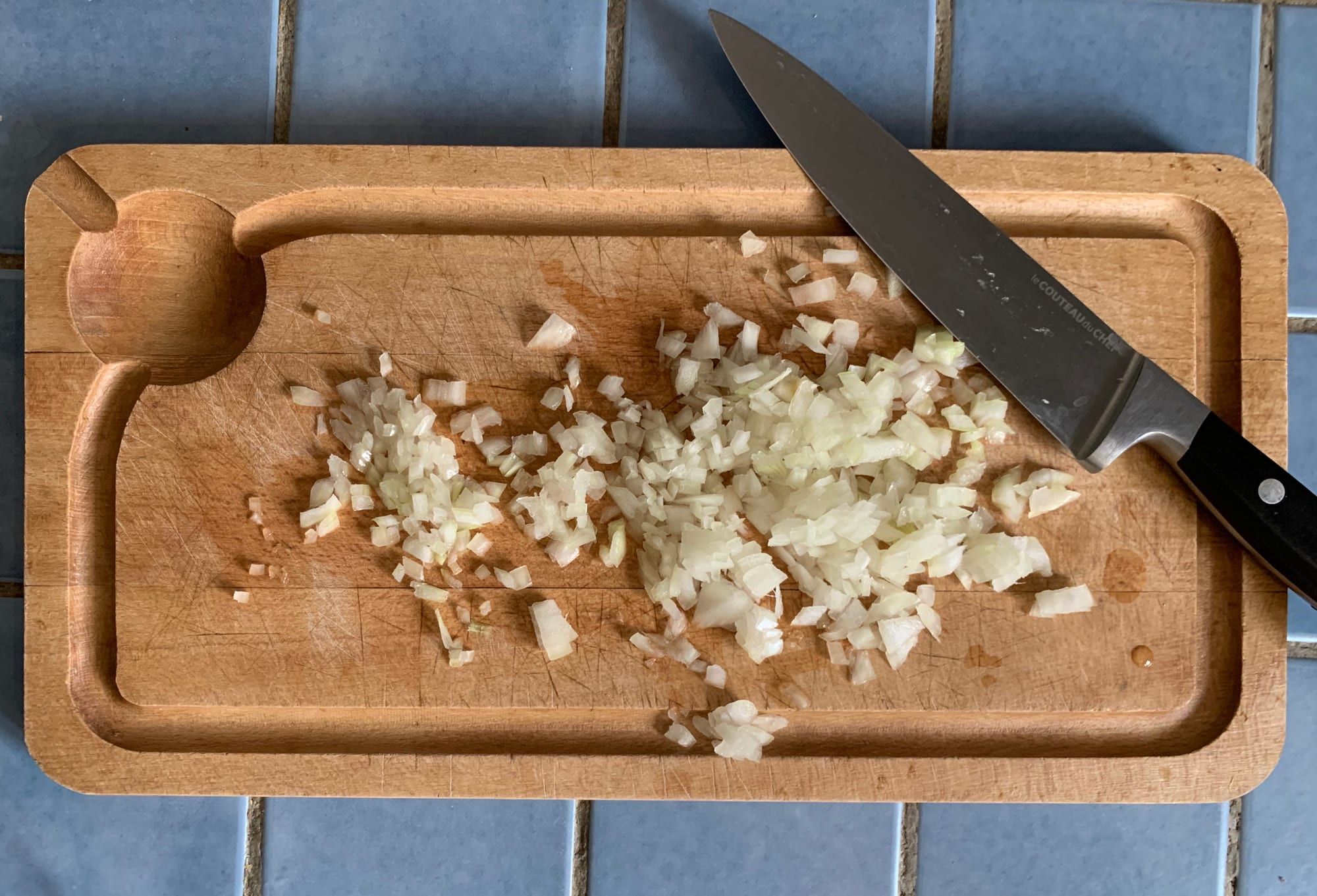
- Use a wooden or plastic board. Glass, stone and metal boards dull the edge.
- Hone before use. A honing steel realigns the edge between sharpenings; it does not remove much metal.
- Sharpen when needed. Use whetstones, a guided system or a professional service. German knives often sharpen at around a 15-degree angle per side; Japanese knives at a slightly smaller angle. WUSTHOF cites 14.5 degrees per side for its Classic.
- Store it safely. A magnetic strip, block or sheath protects both the edge and your fingers.
Watch out
Never try to catch a falling knife, and always cut away from your body. Carry a knife with the blade pointing down and the edge facing backward.
Technique tips for beginners
- Use the claw grip. Curl the fingertips of your guide hand under, so the knuckles guard against the blade.
- Pinch the blade. Grip between thumb and forefinger just in front of the bolster for control.
- Let the knife do the work. A sharp edge needs guidance, not force.
- Cut on a stable board. Place a damp cloth under it so it does not slide.
Which should you buy?
| If you want… | Choose |
|---|---|
| The best knife for the least money | Victorinox Fibrox |
| A heavy, forged all-rounder | WUSTHOF Classic |
| A thin, light, precise blade | MAC MTH-80 |
| Comfort with a pinch grip | ZWILLING Pro |
How we chose
We compared official specifications and pricing as of October 2026, alongside the consensus of established independent reviews. We selected four 8-inch knives that represent distinct styles, with published prices and warranty terms, and we skipped knives that were hard to buy in the US.