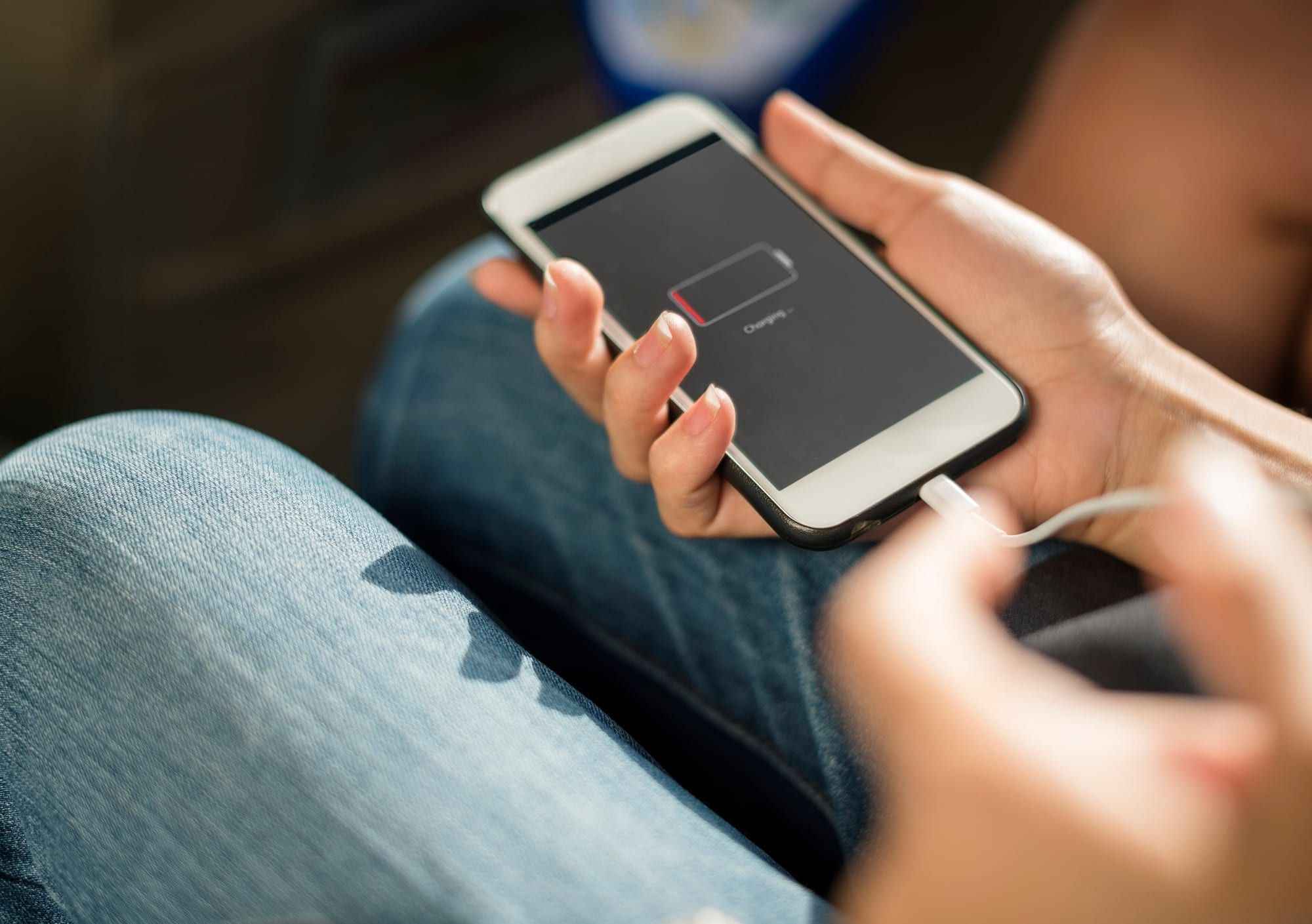
The best power bank for most people who carry a laptop is the Anker Prime Power Bank (26K, 300W): 26,250mAh, up to 300W of total output, 140W from a single USB-C port and a smart display. If you want built-in cables, choose the Anker Laptop Power Bank (25K, 165W). For budget laptop charging the UGREEN 145W 25000mAh is hard to beat at $79.99, and for phones, the Anker MagGo (10K, Slim) and UGREEN MagFlow Pro are the best magnetic banks.
Power banks have grown up. USB-C Power Delivery means the best models can run a MacBook or a gaming handheld, not just top up a phone. The challenge is choosing the right size, because capacity, weight and flight rules all push in different directions.
Our picks at a glance
| Power bank | Best for | Price (US) | Capacity | Output | Weight |
|---|---|---|---|---|---|
| Anker Prime 26K 300W | Overall | $229.99 | 26,250mAh (99.75Wh) | 300W total, 140W per USB-C | 600 g |
| Anker Laptop Power Bank 25K 165W | Built-in cables | $119.99 | 25,000mAh (90Wh) | 165W total, 100W per USB-C | 595 g |
| UGREEN 145W 25000mAh | Value | $79.99 | 25,000mAh | 145W total | Not listed |
| Anker MagGo 10K Slim | Slim magnetic | $79.86 | 10,000mAh | 30W USB-C, 15W Qi2 | 215.9 g |
| UGREEN MagFlow Pro 10000mAh | Fast wireless | $119.99 sale ($149.99) | 10,000mAh | 25W Qi2 | Not listed |
Prices are those on manufacturers’ US stores in October 2026.
Anker Prime Power Bank (26K, 300W): Best overall
Anker Prime Power Bank (26K, 300W)
A 26,250mAh power bank with 300W total output, 140W on a single USB-C port and a smart display.
$229.99 on Anker's US store (October 2026)
The Anker Prime Power Bank (26K, 300W) is the most capable bank here. Its 26,250mAh (99.75Wh) cell is just under the 100Wh limit that most airlines apply, and it can output 300W in total, with up to 140W from one USB-C port and 22.5W from USB-A. A smart display and Bluetooth app show what each port is doing.
It can also recharge quickly, at 140W on a single input and up to 250W with dual input. Expert Reviews named it its top pick. At 600 g and $229.99 it is heavy and expensive, but it replaces a charger, a power bank and a bag of cables.
Choose it if: you carry a power-hungry laptop and want to charge several devices at once.
Anker Laptop Power Bank (25K, 165W): Best with built-in cables
Anker Laptop Power Bank (25K, 165W, Built-In and Retractable Cables)
A 25,000mAh (90Wh) power bank with two built-in retractable USB-C cables, a smart display and up to 165W total output.
$119.99 on Anker's US store (October 2026)
The Anker Laptop Power Bank (25K, 165W) costs $119.99 and packs 25,000mAh (90Wh) into a 595 g body. Two built-in retractable USB-C cables mean you do not need to carry your own. Each USB-C port can supply 100W, and total output reaches 165W with two devices, falling to 130W when three or four ports are in use. A display shows status.
It is a sensible choice for travellers who want one tidy bank for a laptop and a phone.
Choose it if: you hate cable clutter.
UGREEN 145W 25000mAh power bank: Best value for laptops
UGREEN 145W 25000mAh 3-Port Power Bank
A 25,000mAh laptop-ready power bank with 145W total output across three ports.
$79.99 on UGREEN's US store (October 2026)
The UGREEN 145W 25000mAh power bank costs $79.99 on UGREEN’s US store, and offers 25,000mAh, 145W of total output and three ports. That is enough for most ultrabooks, tablets and phones. Detailed port-by-port specifications are on UGREEN’s page, so check them against your laptop’s charger rating before you buy.
Choose it if: you want laptop-ready capacity at the lowest sensible price.
Anker MagGo Power Bank (10K, Slim): Best slim magnetic bank
Anker MagGo Power Bank (10K, Slim)
A slim 10,000mAh magnetic power bank with 15W Qi2 wireless charging and 30W wired USB-C output.
$79.86 on Anker's US store (October 2026)
At 0.58 in thick and 215.9 g, the Anker MagGo Power Bank (10K, Slim) is easy to carry. It has 10,000mAh, snaps magnetically to iPhone 12 to 17, and delivers 15W over Qi2, plus 30W through USB-C. It costs $79.86 on Anker’s US store.
Magnets stick best to iPhones and Qi2 cases. Android users should check compatibility.
Choose it if: you want a pocketable top-up for an iPhone.
UGREEN MagFlow Pro 10000mAh: Fastest magnetic charging
UGREEN MagFlow Pro 10000mAh Qi2 25W Magnetic Power Bank
A 10,000mAh magnetic power bank with 25W Qi2 wireless charging and liquid cooling.
$119.99 on UGREEN's US store, down from $149.99 (October 2026)
The UGREEN MagFlow Pro is a 10,000mAh magnetic bank with 25W Qi2 wireless charging and liquid cooling. UGREEN lists it at $119.99 on sale, down from $149.99. It is pricey for its capacity, but its 25W wireless speed is the highest here.
Choose it if: you want the fastest wireless top-up and do not mind paying for it.
How much power bank do you need?
The right size depends on what you charge and how long you are away from a socket. Advertised capacity is not what you get: voltage conversion and heat mean you typically receive roughly 60 to 70 percent of the rated mAh as usable charge into a device.
| What you charge | Typical need | Suitable pick |
|---|---|---|
| A phone, day to day | 5,000 to 10,000mAh | Anker MagGo 10K Slim |
| An iPhone, wireless and fast | 10,000mAh with Qi2 | UGREEN MagFlow Pro |
| A tablet and a phone | 20,000mAh or more | UGREEN 145W 25000mAh |
| An ultrabook and a phone | 25,000mAh, 100W per port | Anker Laptop Power Bank 25K |
| A power-hungry laptop plus other devices | 26,000mAh, 140W or more | Anker Prime 26K 300W |
A quick rule of thumb: multiply the capacity of your device battery by about 1.5 to find the power bank size you need for one full recharge. A phone with a 4,500mAh battery therefore needs around 7,000mAh of power bank to charge from empty, and a 10,000mAh bank gives you slightly more than one charge.
Qi2 and magnetic charging explained
Qi2 is the wireless charging standard that adds magnets to hold a charger in alignment with your phone. The Anker MagGo is rated at 15W for Qi2 wireless charging, while the UGREEN MagFlow Pro reaches 25W with liquid cooling to keep temperatures down. Wireless charging is convenient because you can use the phone while it charges and there is no cable to plug in. It is slower and less efficient than a cable, so for a quick emergency top-up, use USB-C.
Note
Magnetic power banks stick best to iPhones with MagSafe or Qi2 cases. On Android phones you may need a magnetic case, and not every Android phone supports Qi2.
Flying with a power bank
Power banks must travel in carry-on baggage, not checked luggage, because of fire risk. Many airlines cap capacity at 100Wh without special approval, and some have recently tightened rules on in-flight use and the number of banks per passenger. The two 25,000mAh-class banks here are 90Wh and 99.75Wh respectively, but rules differ by airline and country, so check yours before you travel. Keep terminals covered or the bank in a pouch, and never charge a damaged bank on a plane.
Getting the most from a power bank
- Use the right cable. A cheap cable can limit charging to a trickle. For 100W and above, use a cable rated for it.
- Charge the bank fully before a trip. It also helps to top it up every few months if it sits unused.
- Use the display. The Anker Prime and Laptop models show input and output wattage, which helps you spot a cable or port that is limiting speed.
- Do not stack loads on one port. If two ports share power, the total output splits between them.
- Keep it cool. Heat is the enemy of lithium batteries, so keep banks out of direct sun and hot cars.
Wall charger or power bank?
A power bank is only as useful as its recharge speed. A 25,000mAh bank takes many hours to refill from a slow charger, which is why the Anker Prime supports 140W input and up to 250W with dual input. If you travel with a laptop, a single high-wattage USB-C charger can refill both your laptop and the bank overnight. Check the bank’s input rating and pair it with a charger that can meet it.
When to replace a power bank
A power bank will serve for a few years of regular use, but capacity fades. Replace yours if it no longer holds a charge for as long as it used to, if it gets unusually hot, or if the case swells or is damaged. Dispose of old batteries at a proper recycling point rather than in household waste.
What to look for
Tip
Check the watt rating of your laptop charger. A power bank must match or exceed it for full-speed charging.
Capacity and flights
Capacity is measured in mAh, but watt-hours (Wh) matter for flights. Most airlines allow banks up to 100Wh in carry-on baggage. Both Anker banks above are within that limit. Always check your airline’s current rules.
Output and ports
A phone needs 20 to 30W for fast charging. A laptop needs 45 to 100W or more. Look at both the per-port and the total figures, because total output drops as more ports are used.
Wireless charging
Qi2 magnetic charging is convenient but slower and less efficient than a cable. It is best for light top-ups.
Weight and size
A 25,000mAh bank weighs around 600 g. If you only charge a phone, a 10,000mAh bank is far easier to carry.
Safety
Buy from reputable brands, avoid damaged or swollen batteries, and do not leave a bank in a hot car.
Which should you buy?
- Best for a laptop and phone: the Anker Prime Power Bank (26K, 300W).
- Built-in cables: the Anker Laptop Power Bank (25K, 165W).
- Budget laptop bank: the UGREEN 145W 25000mAh.
- Slim iPhone bank: the Anker MagGo (10K, Slim).
- Fast wireless: the UGREEN MagFlow Pro.
How we chose
We compared official specifications and pricing as of October 2026, alongside the consensus of established independent reviews. We weighed capacity, output, ports, portability, safety and price.