The secret to two weeks in a carry-on is that you pack for one week and wash once. Choose a 40-litre bag, build a small wardrobe of clothes that mix and match, wear your heaviest items on the plane and plan one laundry stop around day seven. With those three habits, a 40-litre backpack such as the Tortuga Travel Backpack Pro 40L or a 41-litre case such as the Away The Carry-On holds everything you need.
This guide is a system, not just a list. It explains how to choose a bag, build a capsule wardrobe, plan laundry, deal with liquids and electronics and pack the bag in the right order.
Key point
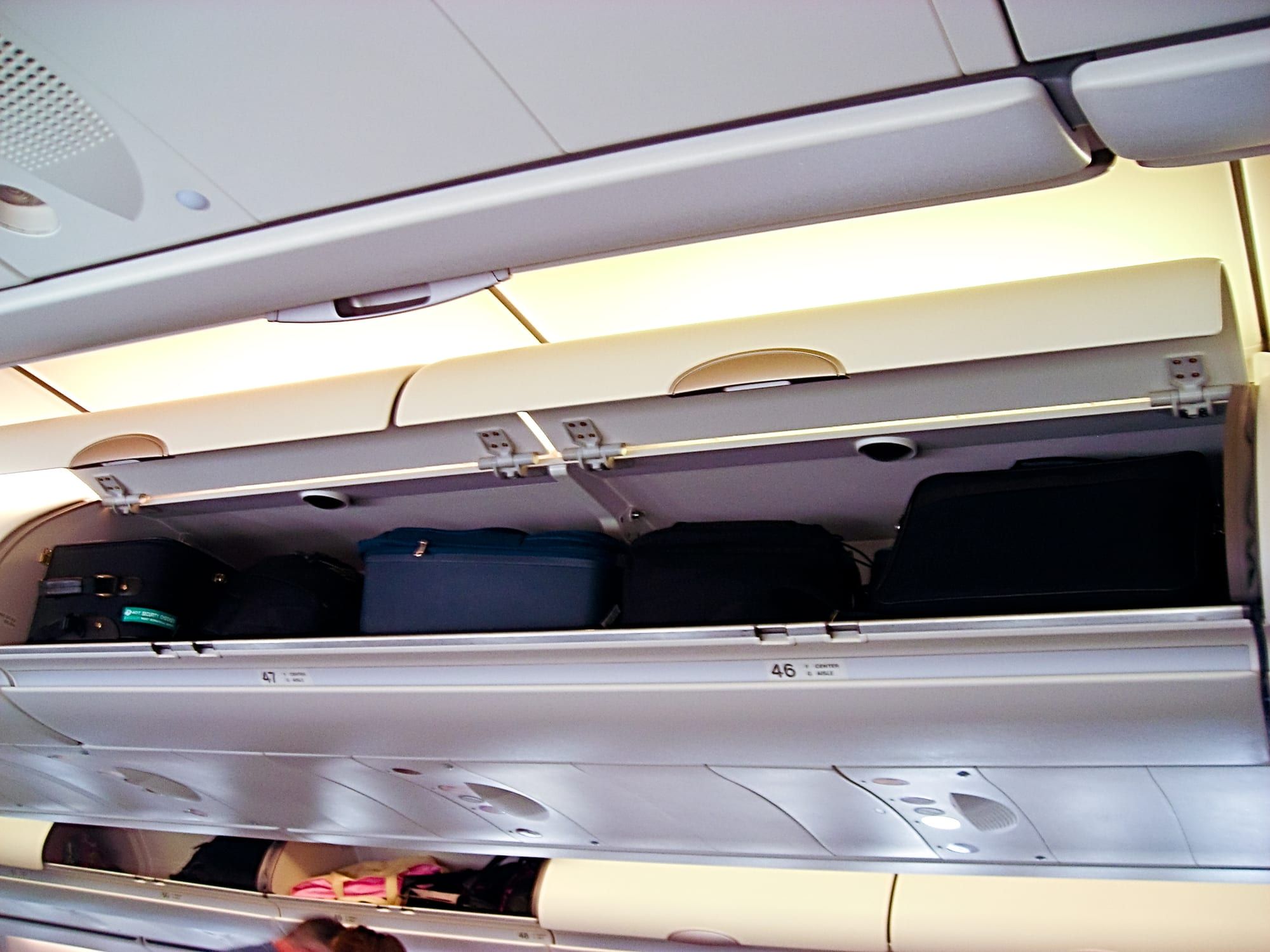
Airlines set their own carry-on size and weight limits. United and Delta, for example, publish 22 x 14 x 9 inches, but limits elsewhere may be smaller or include weight caps. Confirm your airline’s rules before you pack, and look at every airline on a multi-leg trip.
Step 1: Choose the bag
Two formats work for two weeks: a 40 to 45 litre backpack or a 40 to 45 litre wheeled carry-on.
| Format | Good for | Watch for |
|---|---|---|
| Backpack (about 40 L) | Cobbled streets, trains, stairs, multi-stop trips | Weight on your back; lower capacity than a roller when airlines limit size |
| Wheeled carry-on (about 40 L) | Airports, hotels, smooth surfaces | Wheels and handle add weight; awkward on rough ground |
The Tortuga Travel Backpack Pro 40L is built for this exact use: the maker says it fits 7 to 10 days of clothes and everything else, has a suitcase-style opening and carries up to 80% of its load on the hips. The Away The Carry-On is a hardside option at 21.7 x 14.4 x 9 inches and 41 litres, with a compression pad that helps flatten a full bag.
Tortuga Travel Backpack Pro 40L
A 40-litre carry-on travel backpack with a suitcase-style opening, hip-belt load carrying and weatherproofing.
$350 (October 2026, US list price)
Away The Carry-On
A polycarbonate hardside carry-on spinner with a compression system, TSA-accepted lock and a lifetime-guarantee brand reputation.
$275 (October 2026, US list price)
Step 2: Build a capsule wardrobe
The smallest wardrobe that works is one where every top goes with every bottom. Pick two or three base colours and one accent.
A two-week list for a mixed-climate trip
| Category | Quantity | Notes |
|---|---|---|
| Tops | 5 | Mix of short and long sleeves; quick-drying fabrics |
| Bottoms | 2 to 3 | One pair worn, one or two packed |
| Underwear | 7 | Quick-drying, washed once |
| Socks | 5 to 7 | Merino or synthetic dries fast |
| Warm layer | 1 | A fleece or light jumper |
| Rain or wind jacket | 1 | Wear it on the plane |
| Shoes | 2 pairs | One worn, one packed |
| Sleepwear | 1 set | Can double as loungewear |
| Swimwear | 1 | Only if you will swim |
This is a template, not a rule. Adjust it for climate and the formality of your trip.
Choose fabrics that dry fast
Fabrics that dry overnight make the laundry plan work. Merino wool, synthetic blends and lightweight cotton blends dry faster than heavy cotton. Avoid jeans if you can, because they are heavy, slow to dry and bulky.
Wear your bulkiest items
Boots, a jacket and a jumper take up a lot of volume. Wear them on the day you fly. That alone can free several litres.
Step 3: Plan laundry
The laundry plan is what turns a one-week wardrobe into a two-week one. Choose one of these:
- Sink wash. Wash underwear, socks and base layers in the basin with a little travel soap and hang them overnight. This works for quick-drying items.
- Laundromat. On the middle day of your trip, find a self-service laundromat or a laundry service. Many cities have them close to hotels.
- Hotel laundry. Convenient but often expensive. Check the price list first.
Pack a few travel-size laundry detergent sheets or a small bottle, and a flat sink plug if you will wash by hand. Also pack a flexible clothesline only if you expect to dry things in places without rails.
Tip
Book at least one stay with laundry access or near a laundromat around the midpoint of your trip. That single decision makes two weeks easy.
Step 4: Organise with cubes
Cubes turn a bag into drawers. Use three or four:
- A large cube for bulky items and bottoms.
- A medium cube for tops.
- A small cube for underwear and socks.
- A flat or small cube for chargers and cables.
If your bag is tight, compression cubes such as the NOMATIC Compression Packing Cubes reduce the volume of soft clothes. NOMATIC says its zippered compression system reduces the space clothes take up by up to 50%, and sells large, medium and small cubes in a 3-pack. Our best packing cubes guide compares more options.
NOMATIC Compression Packing Cubes
Mesh-topped packing cubes with a zippered compression system, sold in small, medium and large sizes and as a 3-pack.
Medium $29.99, Large $39.99, 3-pack $79.99 (October 2026, US list price)
Step 5: Handle liquids and toiletries
Carry-on liquids follow a standard rule at many airports. The TSA in the United States allows liquids, gels and aerosols in containers of 3.4 ounces (100 ml) or less, all fitted in one quart-size clear bag. Many other countries apply a similar 100 ml rule, though some airports are changing how they screen liquids, so check each airport on your route.
To pack light:
- Use solid alternatives: shampoo bars, solid deodorant and toothpaste tablets.
- Decant liquids into small refillable bottles.
- Buy bulky items at your destination, such as sunscreen or shaving cream.
- Keep your toiletry bag at the top of the bag for quick removal at security if required.
Step 6: Pack your electronics and power
Electronics make a carry-on heavy, so choose carefully:
- Phone, charger and one cable. A USB-C cable that fits everything saves clutter.
- A power bank. Spare lithium batteries and power banks belong in the carry-on, not checked bags.
- A travel adapter. An all-in-one unit such as the Anker Universal Charger (100W, 4-in-1) has plugs for the US, UK and EU built in, three USB-C ports and one USB-A port, weighs 0.58 lb and lists a $79.99 price. It replaces both a charger and an adapter.
- Headphones. Wear or carry them separately.
- A laptop only if you need it. It is the heaviest single item.
Anker Universal Charger (100W, 4-in-1)
A 100W all-in-one travel charger with built-in US, UK and EU plugs, three USB-C ports and one USB-A port.
$79.99 (October 2026, US list price)
Step 7: Pack in the right order
- Line the bag with your heaviest items, such as shoes, along the spine side of a backpack or the wheel end of a case.
- Add the large cube, then the medium cube, then the small cube.
- Put the toiletry bag on top where you can reach it.
- Slide documents, chargers and a spare layer into outside pockets.
- Leave a little space. A bag that is full to the zip will be harder to close after you buy anything.
Weigh the bag. If your airline limits carry-on weight, check it matches. Even without a limit, a heavy bag is tiring to carry.
Adjusting the list for climate
The capsule list above flexes with the destination.
| Trip type | Change |
|---|---|
| Hot and humid | Swap the warm layer for a second light top; choose loose, quick-drying fabrics; add a hat |
| Cold | Wear the heaviest layers on the plane; pack a thin down or synthetic jacket that compresses; add thermal base layers |
| Mixed city trip | Stay with layers: a base top, a mid layer and a shell |
| Beach plus city | One swimsuit, one cover-up and one pair of sandals that also work for walking |
| Business plus leisure | One smart outfit that can be rolled, plus shoes that work for both |
What to leave behind
Most overpacking comes from a short list of items. Be sceptical of each of these:
- “Just in case” clothes. You can buy a replacement almost anywhere.
- Duplicate gadgets. One camera, one phone, one headphone.
- Full-size toiletries. Buy at the destination, or decant.
- Heavy books. Use an e-reader or phone.
- Multiple pairs of shoes. Two pairs is enough; one should be comfortable for walking all day.
- Large towels. Most hotels provide them; a small quick-dry towel suffices for hostels or beaches.
What to wear on the travel day
Your outfit on the flight is part of the packing plan. Aim to wear:
- Your heaviest shoes or boots.
- The bulkiest trousers or your only pair of jeans.
- A base top and a mid layer.
- Your jacket, with the pockets used for a passport, phone and wallet.
The rest of the clothing goes in the bag. When you reach security, you will take off the jacket and perhaps your shoes, so wear a belt-free outfit and keep your personal item easy to open.
Troubleshooting
| Problem | Fix |
|---|---|
| The bag will not close | Remove one item per category; wear more on the plane; use compression cubes |
| Clothes smell after a few days | Air them out in a mesh cube; pack a small packet of detergent sheets |
| You are over the airline’s weight limit | Move heavy items such as a laptop or books to your personal item; check the personal-item allowance |
| Everything is wrinkled | Roll soft items; fold shirts around a card; hang them in the bathroom while you shower |
| You bought souvenirs | Mail them home, wear a layer or leave an old item behind |
What this means for you
You do not need a bigger bag; you need a smaller wardrobe and a laundry plan. Choose a bag around 40 litres, pack one week of mix-and-match clothes, wear your bulkiest layers on the plane and wash once. Add cubes for organisation and a single compact charger and adapter, and you can carry everything for two weeks without ever visiting the baggage carousel.